Spring’s that time when we all get the itch to declutter our homes, but also our plans. If your goals have gone a bit dusty, here’s how I reset, and you can too.
First, reflect. I grab a coffee, sit down, and ask: What’s still important to me now? Some goals expire, and that’s fine. I pick the ones that still matter.
Second, simplify! I break each goal into its next smallest step. If it’s too big, I won’t start. One small, doable step is all I need.
Third, I restart. No big drama. I schedule that first action for this week, no need to wait for the “perfect” Monday.
If you need a hand resetting or staying accountable, I’ve got your back. Let’s get you unstuck.
You know that feeling: you’ve got goals, but suddenly, everything feels like trudging through peanut butter. Here’s what I do when I hit that wall, and trust me, I do.
First, I shrink the task. When I’m stuck, I don’t think about climbing the whole mountain, I pick one rock to step on. One small action, even if it’s just 10 minutes of progress. It’s like jump-starting the engine.
Second, I remind myself that motivation is overrated. I don’t rely on feeling inspired, I rely on habits. So even when I don’t feel like it, I do the thing. Action first, motivation second. It’s sneaky, but it works.
Third, I re-anchor. I revisit why I’m doing this in the first place. Sometimes, I literally sit down and write out what future me gets from this. Spoiler: future me is usually grateful.
If you’re feeling stuck, try one of these. And if you want to get unstuck faster, you know where to find me.
If you want to get quicker on the pitch, you need two things.
Strength to produce force.
Power to produce it fast.
These 5 exercises help you build both, they do not replace sprint practice, they support it. Use them to improve acceleration, sharp stops and fast re-acceleration.
Who this is for
Footballers and field sport athletes
Busy adults who want a simple gym plan that carries over to sport
Anyone who wants to feel faster, stronger and harder to knock off the ball
How to use this list
Learn these exercises. Train them 1 to 2 times per week.
Keep the reps low. Keep the speed high.
Stop each set while you still have crisp form.
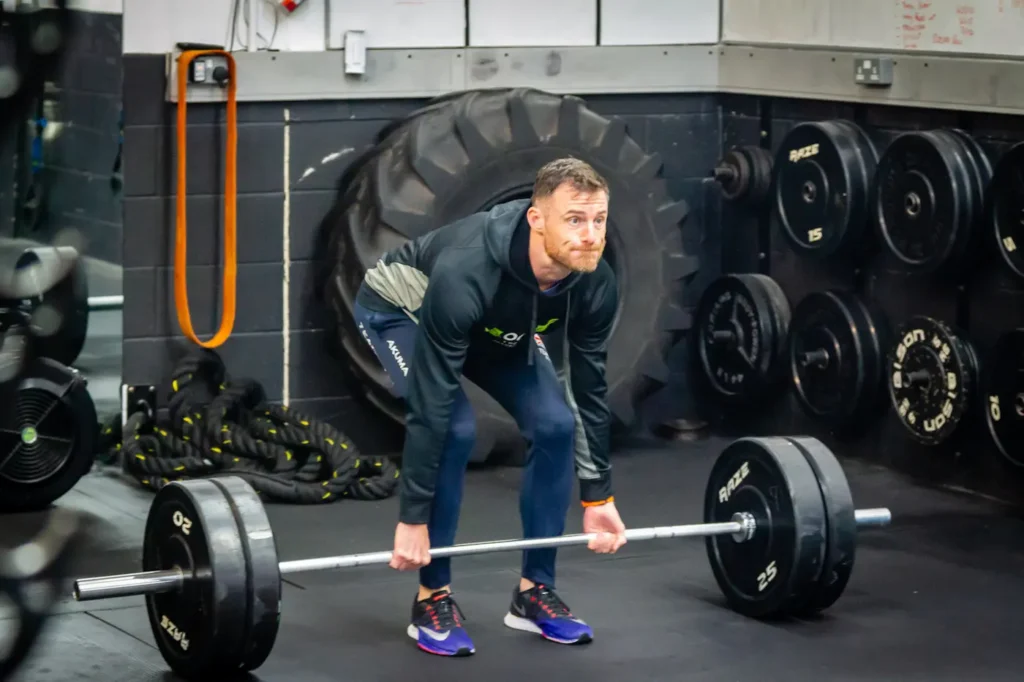
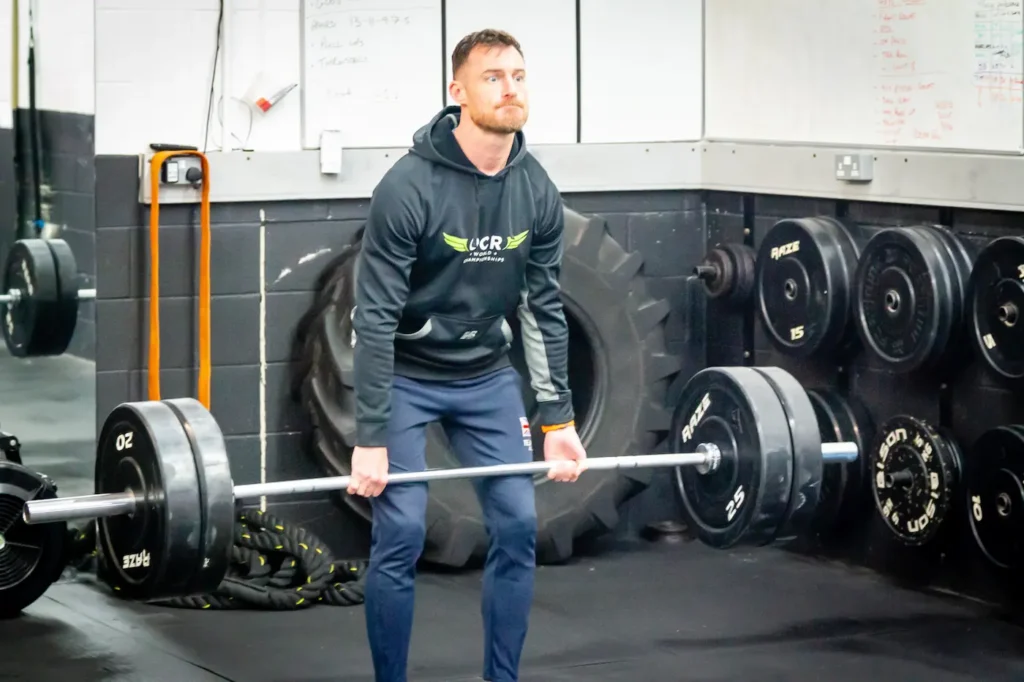
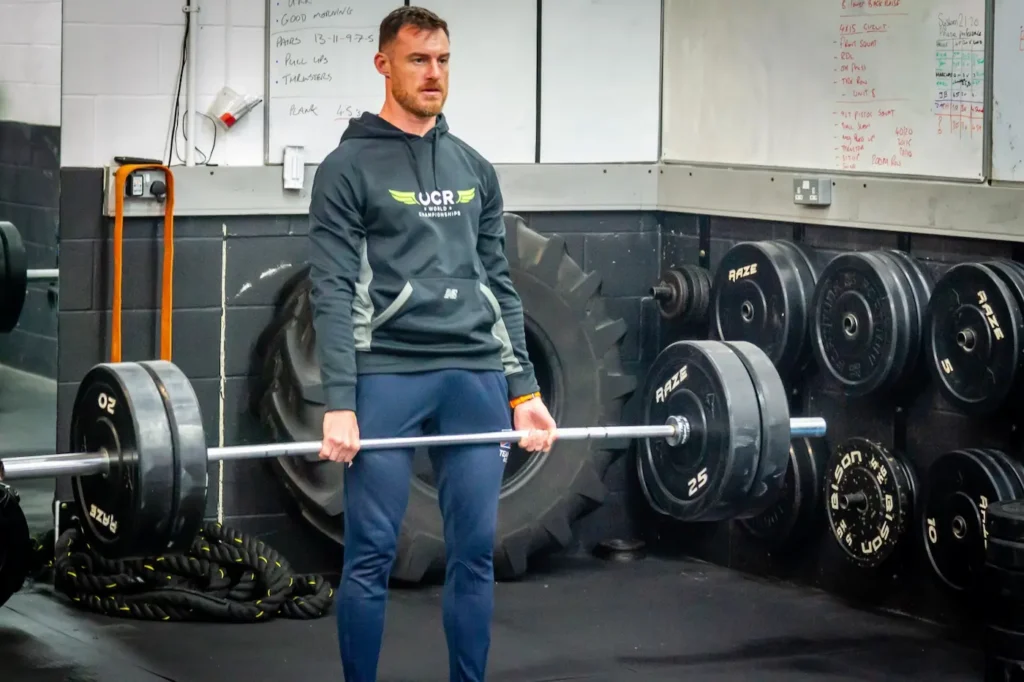
1) Deadlift
Best for Posterior chain strength for sprinting and change of direction.
How to do it
Strong start position. Bar over mid foot. Back locked in before the pull.
Stand with feet about hip width
Bar over mid-foot
Hands just outside your legs, use double overhand or mixed grip
Brace your trunk hard
Push the floor away and stand tall
Lock out with hips through, ribs down
Lower with control and reset each rep
Keep the bar close. Drive through the floor. Stay tight through the trunk.
Key coaching cues
Keep the bar close to your shins
Keep your back position steady
Drive through the whole foot
Finish tall. Hips through. Ribs down. No leaning back.
Common mistakes
Bar drifting away from the body
Rounding the lower back
Yanking the bar off the floor
Deadlifts build hip extension strength. Hip extension drives acceleration. Stronger hips mean more force into the ground during your first few steps.
Sets and reps
3 to 5 sets of 2 to 5 reps
Rest 2 to 3 minutes
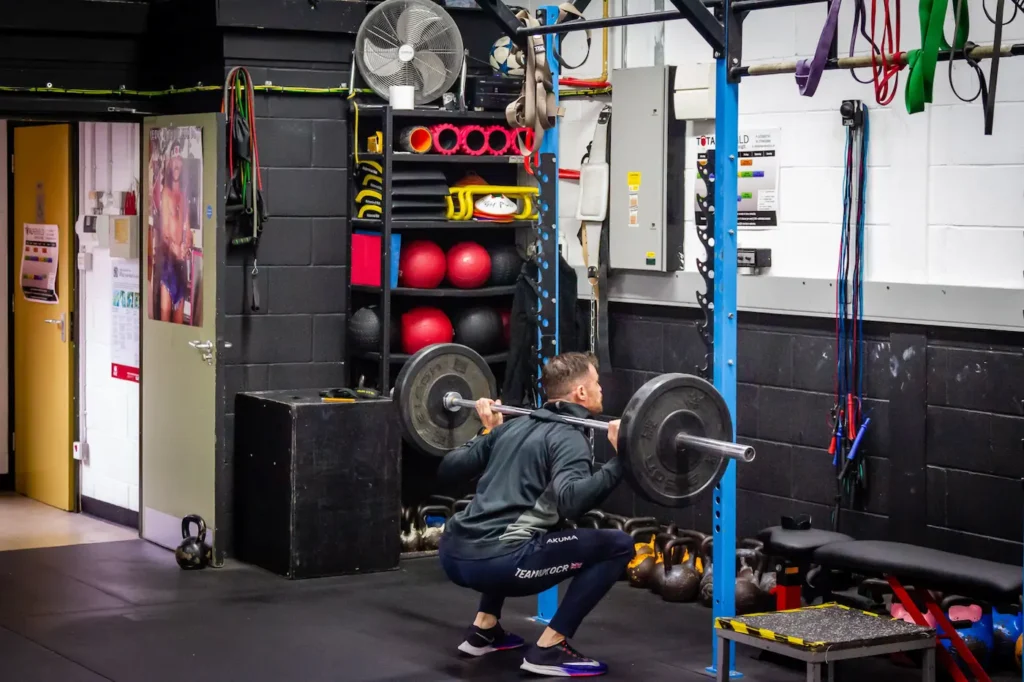
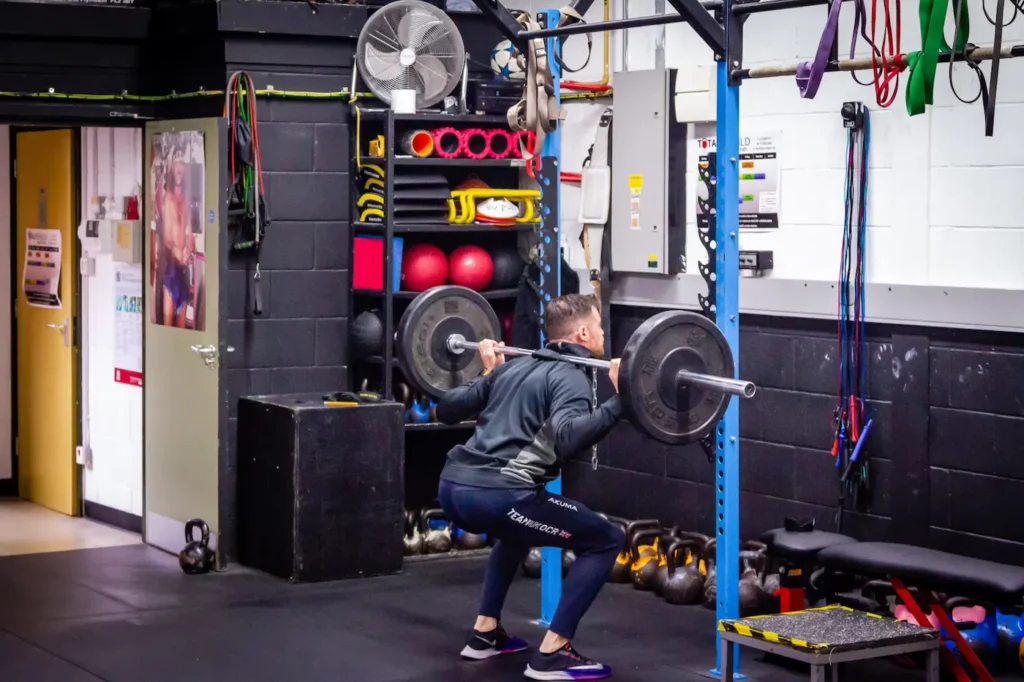
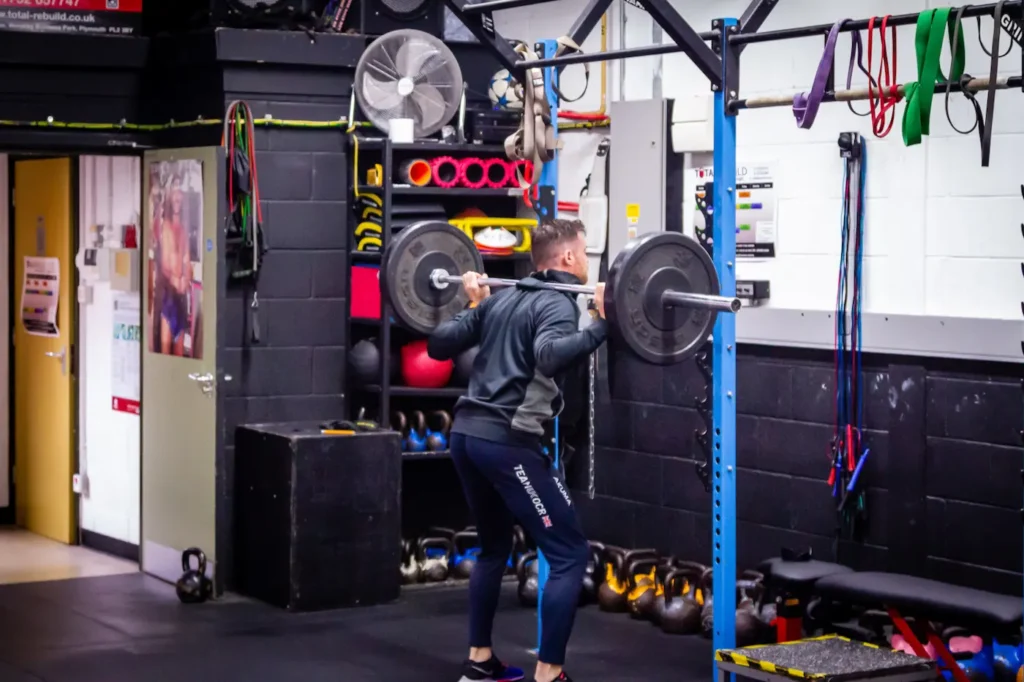
2) Back Squat
Best for Total lower body strength, torso control and stronger hips.
How to do it
Hit your best depth with control. Heels flat. Chest stable. Knees tracking well.
Choose a stance that feels stable and strong
Grip the bar tight and set your upper back
Brace before you descend
Sit down between your hips and keep your feet planted
Hit your best depth with control
Drive up fast and stand tall
Drive up fast. Hips and shoulders rise together.
Key coaching cues
Keep your trunk braced
Keep your knees tracking over your toes
Drive up with intent, do not grind
Stand tall at the top. Finish strong without leaning back.
Common mistakes
Losing brace at the bottom
Knees collapsing in
Turning every set into a max effort grind
Sets and reps
3 to 5 sets of 3 to 6 reps
Rest 2 to 3 minutes
Back squats build force through the hips and knees. More force into the ground means better acceleration and stronger change of direction.
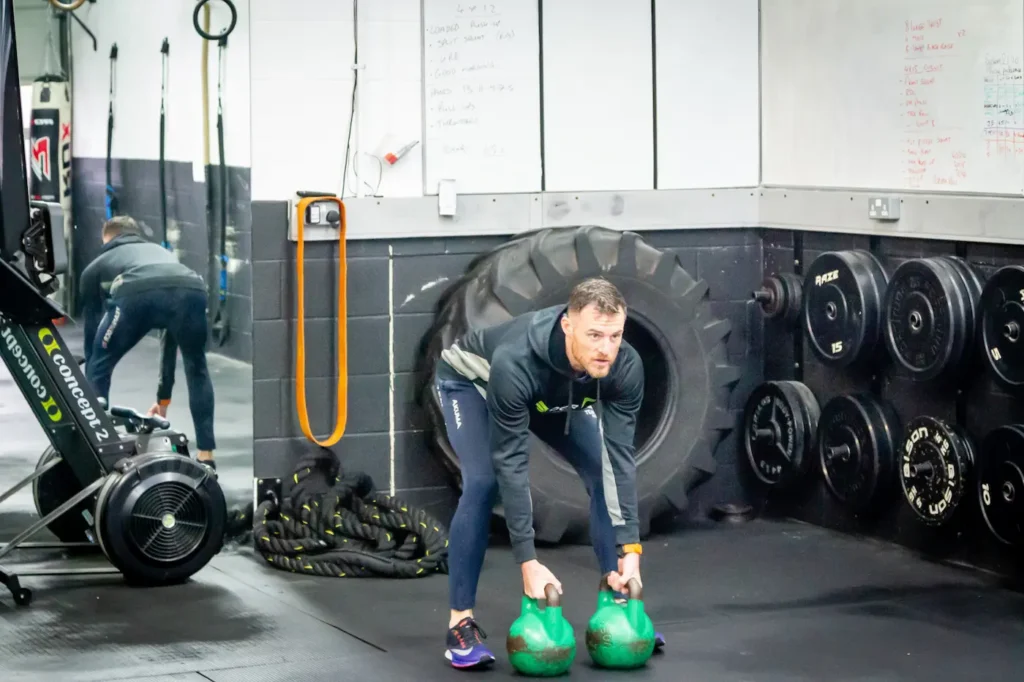
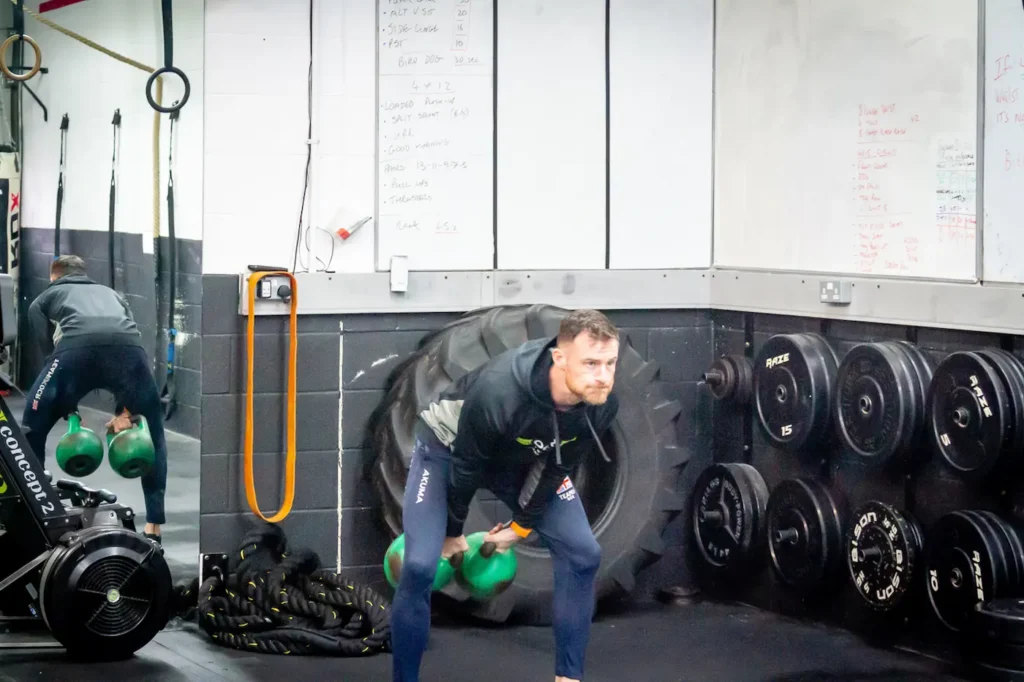
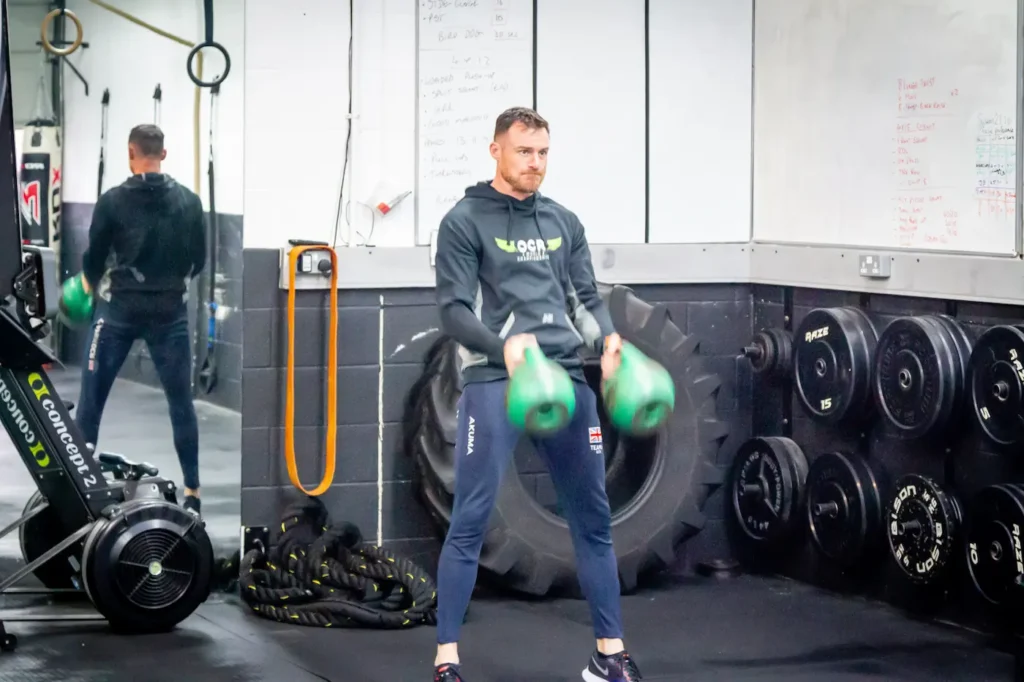
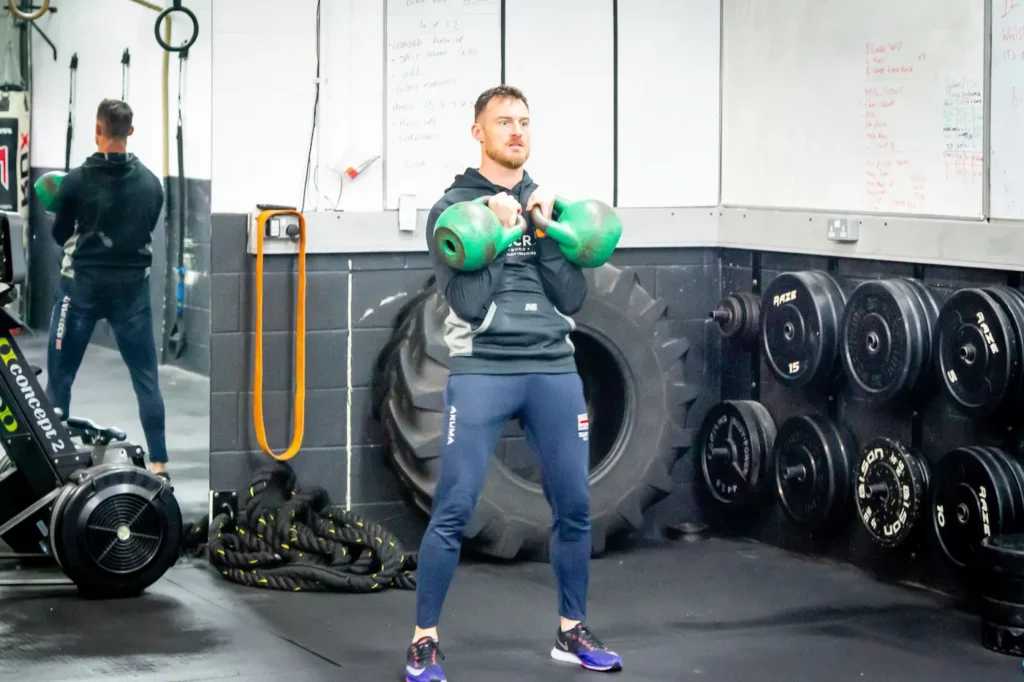
3) Double Kettlebell Clean
Best for Explosive hip extension, full body power and strong grip.
How to do it
Start from a strong hinge. Bells close. Back tight before the drive.
Set two kettlebells between your feet
Hinge back and grab the handles
Keep your lats tight so the bells stay close
Drive the floor away and snap the hips through
Catch the bells softly in the rack position
Reset and repeat
Hips snap. Arms guide. Power comes from the floor.
Key coaching cues
Hips do the work, not your arms
Move fast from the floor to the rack
Catch quietly and stable
Let the bells float. Do not curl them.
Common mistakes
Curling the bells up with the arms
Crashing the bells onto the forearms
Letting the bells swing too far away
Catch soft. Elbows in. Stable and ready to repeat.
Sets and reps
5 to 8 sets of 2 to 3 reps
Rest 60 to 90 seconds
Double kettlebell cleans train rapid hip extension. That same hip snap drives your first few steps when accelerating on the pitch.
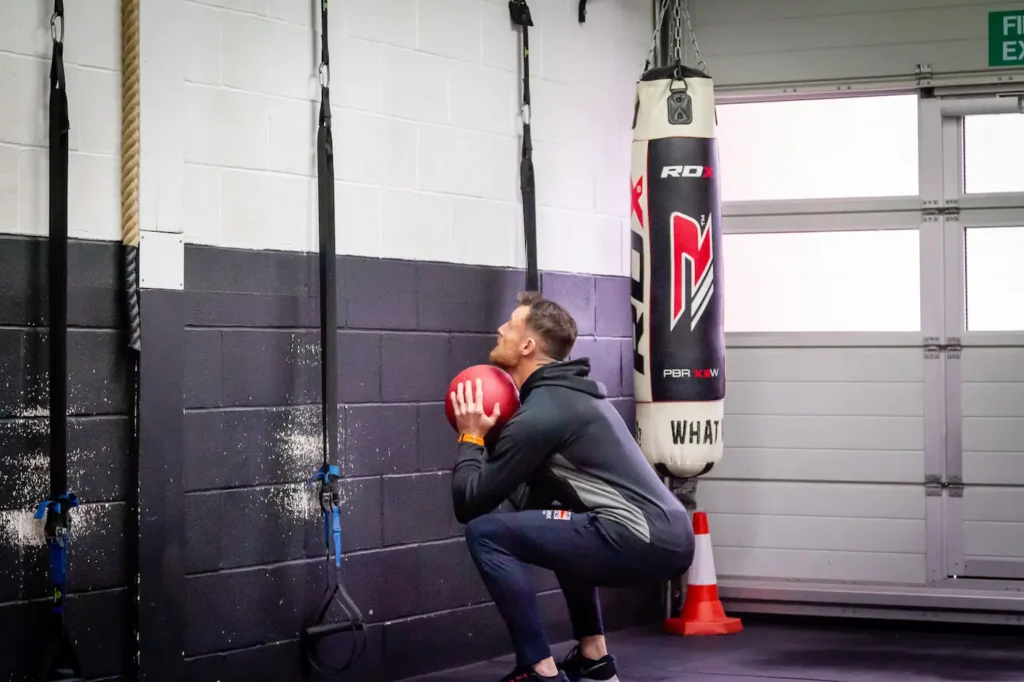
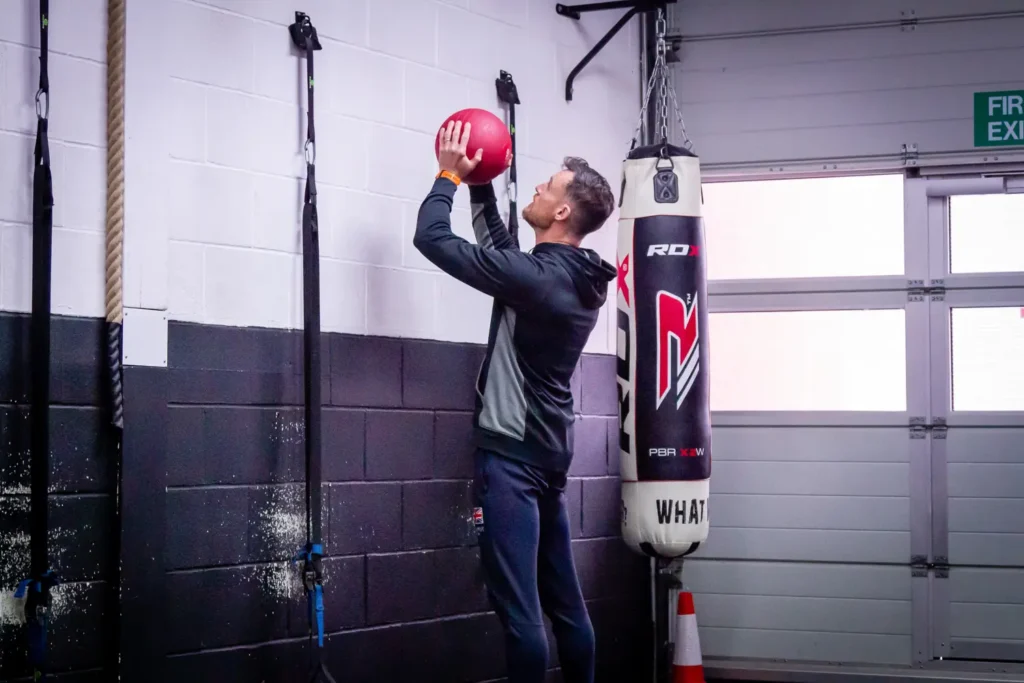
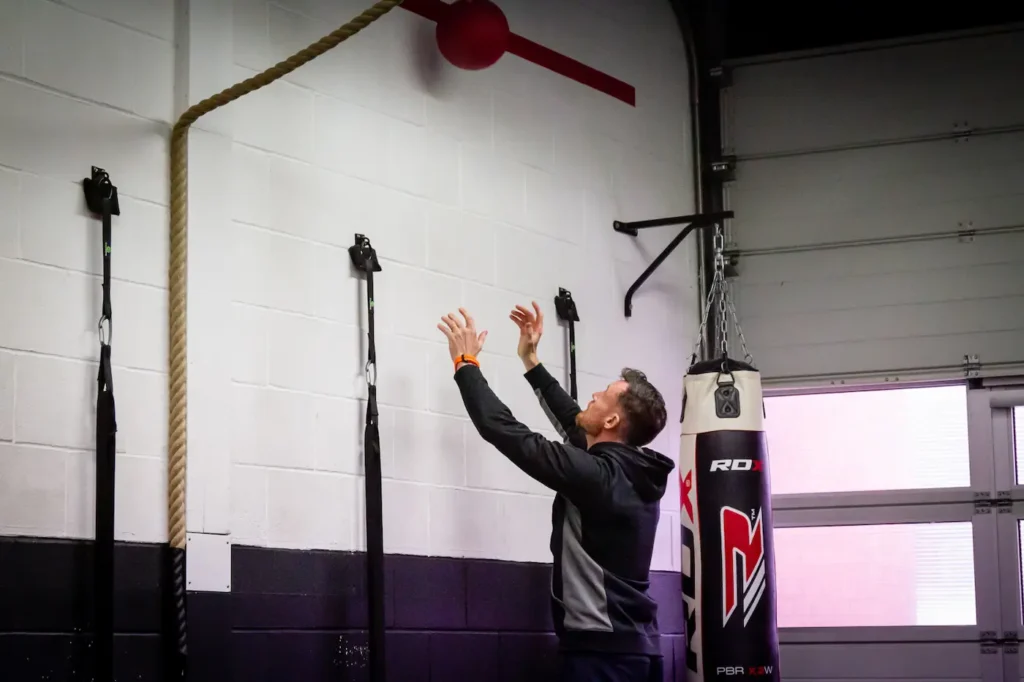
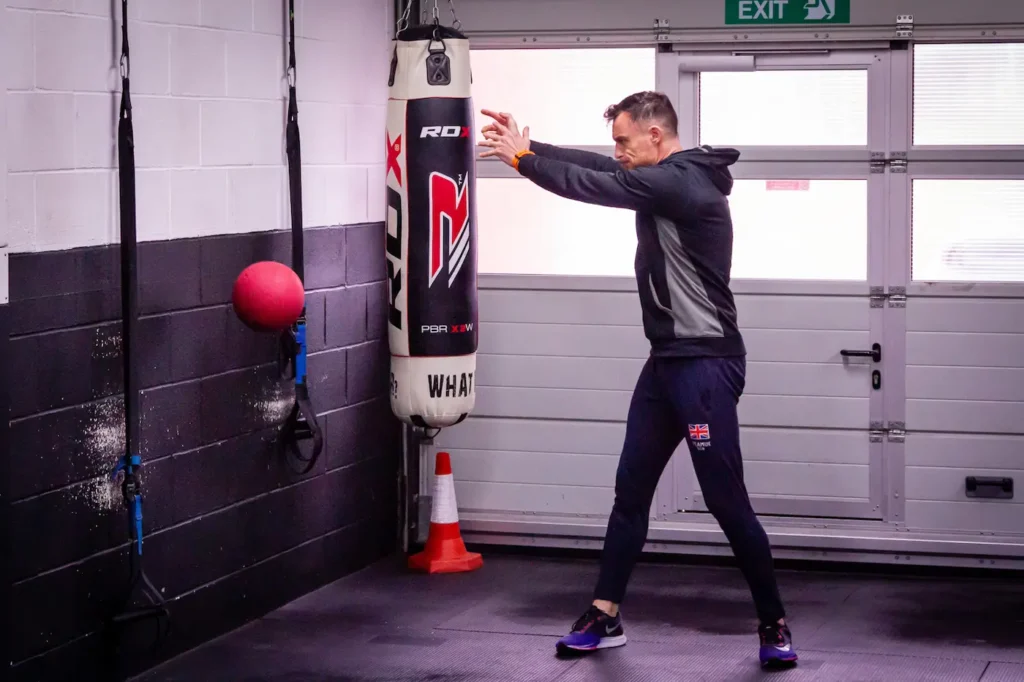
4) Medicine Ball Squat Throw to Wall
This is not a conditioning wall ball.
This is a power throw.
Best for Fast transition from lowering to driving up, like a quick change of direction.
How to do it
Drop fast into the squat. Stay braced and ready to reverse the movement.
Stand about one step from a solid wall
Hold the medicine ball at chest height
Drop into a quick squat and keep your feet planted
Reverse fast and throw the ball high to the wall
Catch, reset and repeat
Key coaching cues
Drop fast, drive faster
Keep the throw crisp
Use a ball weight that lets you move quick
Drive through the floor. Extend hips and knees. Throw with intent.
Common mistakes
Using a ball that is too heavy
Turning it into a slow squat
Catching loose and getting pulled forward
Finish tall. Let the ball travel. Reset quickly for the next rep.
Sets and reps
6 to 10 sets of 2 to 4 reps
Rest 45 to 75 seconds
Medicine ball squat throws train rapid force production. That fast switch from lowering to driving up mirrors the demands of acceleration and sharp change of direction on the pitch.
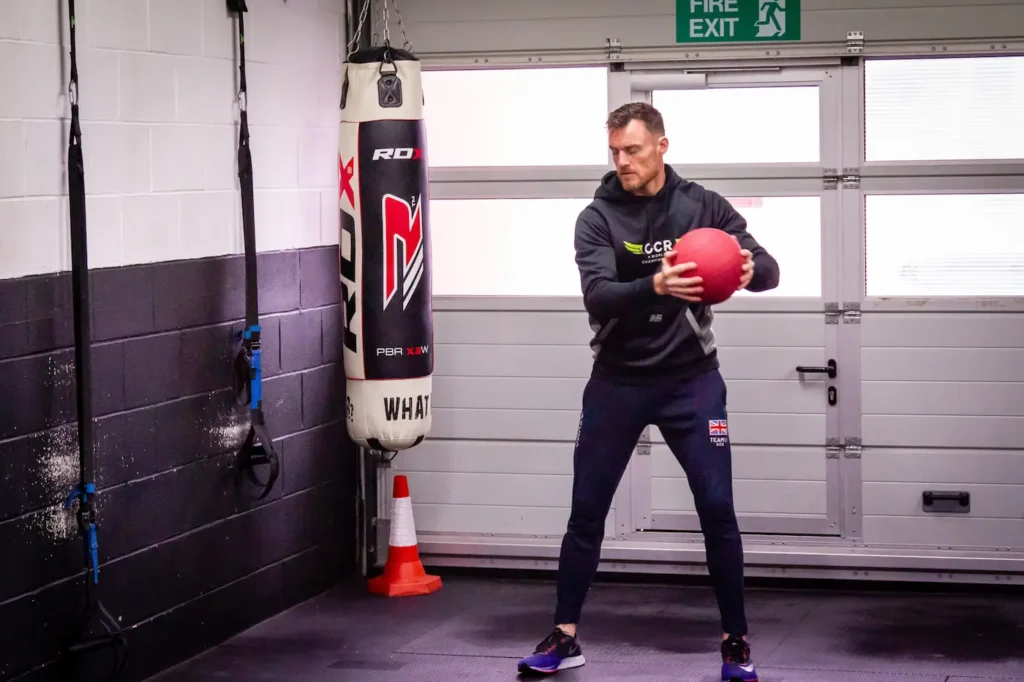
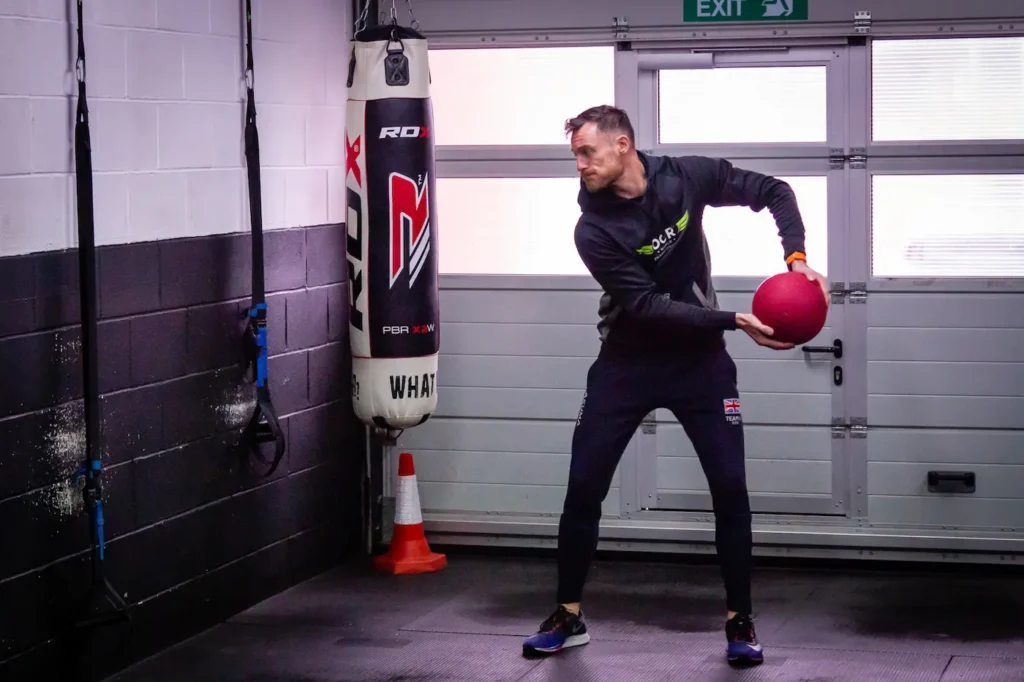
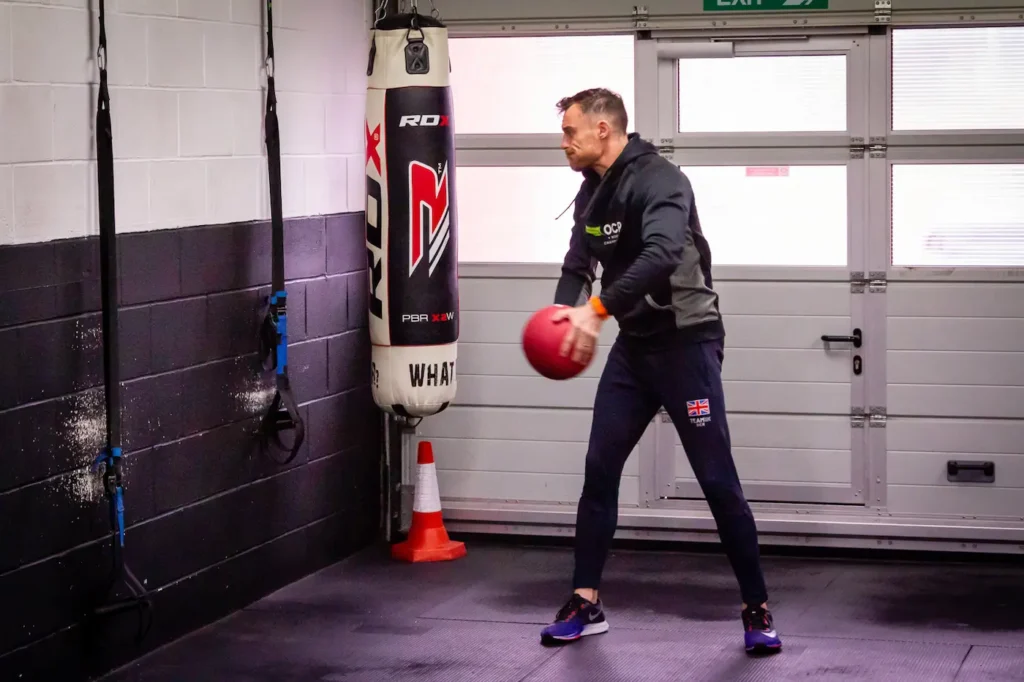
5) Open Stance Medicine Ball Rotation
Best for Rotational power for turns, contacts, shielding, strikes and throws.
How to do it
Load into the back hip. Stay tall through the torso.
Stand side-on to the wall with an open stance
Start the ball at the back hip
Load into the back hip and keep your torso braced
Drive the back foot into the floor
Rotate hips first, then torso, then arms
Release the ball into the wall and reset
Drive the back foot into the floor. Rotate hips before shoulders.
Key coaching cues
Lead with the hip, do not arm throw
Keep your ribs down
Finish balanced, ready to move
Throw with intent. Let the hips lead the movement.
Common mistakes
Twisting only through the low back
Throwing with the arms
Standing too close and rushing the pattern
Finish the rotation. Reset under control.
Sets and reps
6 to 10 sets of 2 to 4 reps per side
Rest 45 to 75 seconds
Open stance rotational throws train force transfer from the ground through the hips into the upper body. That sequence underpins sprinting, tackling, striking and sharp changes of direction.
A simple weekly plan
If you train 3 to 4 days a week, this fits.
Option A: Two gym days plus one pitch speed day
Day 1 Gym strength + power
Back squat 4×4
Double kettlebell clean 6×2
Medicine ball squat throw 8×3
Day 2 Pitch speed
6 to 10 short sprints of 10 to 20 metres
Full rest between reps
Stop while your speed stays high
Day 3 Gym strength + rotation
Deadlift 5×3
Open stance med ball rotation 8×3 each side
Optional: light assistance work you already tolerate well
Option B: One gym day plus sport sessions
If you already play and train on the pitch, run this once per week.
Full body gym
Back squat 4×4
Deadlift 4×3
Medicine ball squat throw 6×3
Open stance med ball rotation 6×3 each side
FAQs
Will these exercises make me faster without sprinting?
They will help.
They will not replace sprint work.
If you want to get quicker, keep at least one short sprint session each week.
How heavy should I go?
Heavy enough to challenge you.
Light enough to move well.
If the last rep turns into a grind, drop the load.
How long should I rest between sets?
Strength lifts need longer rest.
Power work needs enough rest to stay fast.
Use:
2 to 3 minutes for deadlifts and squats
45 to 90 seconds for cleans and throws
What if I only have 30 minutes?
Do this:
Squat 4×4
Clean 6×2
Med ball throw 6×3
Leave.
Do it again next week.
Key takeaways
Strength supports speed
Power expresses it fast
Train these 1 to 2 times per week
Keep reps low and crisp
Pair this with short sprints for best carryover
If you want me to build this for you in Hevy, start a conversation.