If you want to get quicker on the pitch, you need two things.
Strength to produce force.
Power to produce it fast.
These 5 exercises help you build both, they do not replace sprint practice, they support it. Use them to improve acceleration, sharp stops and fast re-acceleration.
Who this is for
- Footballers and field sport athletes
- Busy adults who want a simple gym plan that carries over to sport
- Anyone who wants to feel faster, stronger and harder to knock off the ball
How to use this list
Learn these exercises. Train them 1 to 2 times per week.
Keep the reps low. Keep the speed high.
Stop each set while you still have crisp form.
1) Deadlift
Best for
Posterior chain strength for sprinting and change of direction.
How to do it
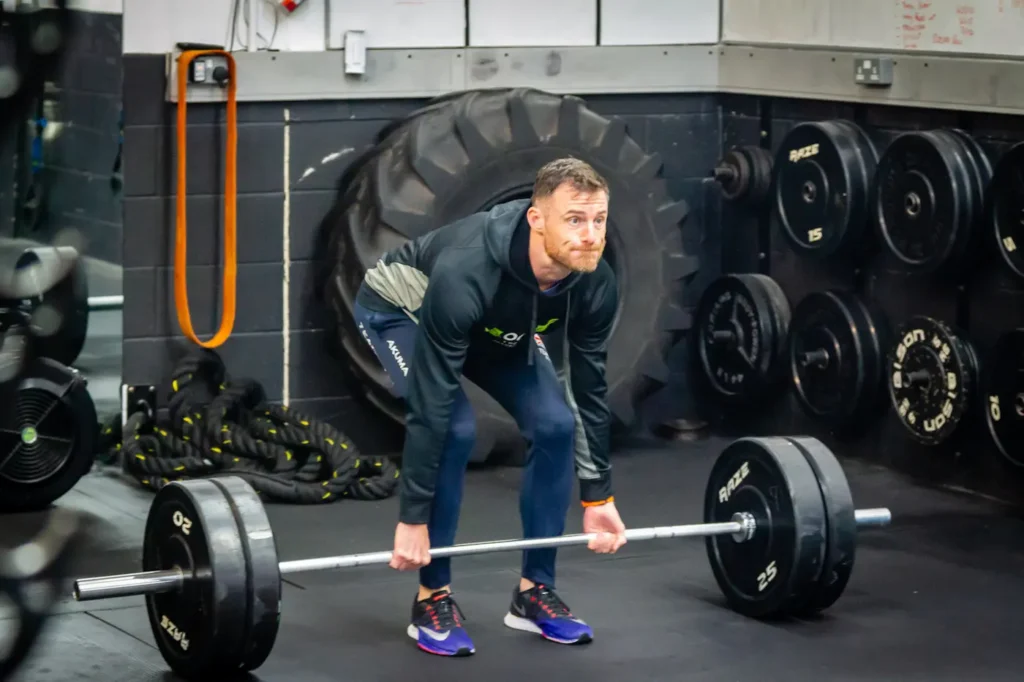
- Stand with feet about hip width
- Bar over mid-foot
- Hands just outside your legs, use double overhand or mixed grip
- Brace your trunk hard
- Push the floor away and stand tall
- Lock out with hips through, ribs down
- Lower with control and reset each rep
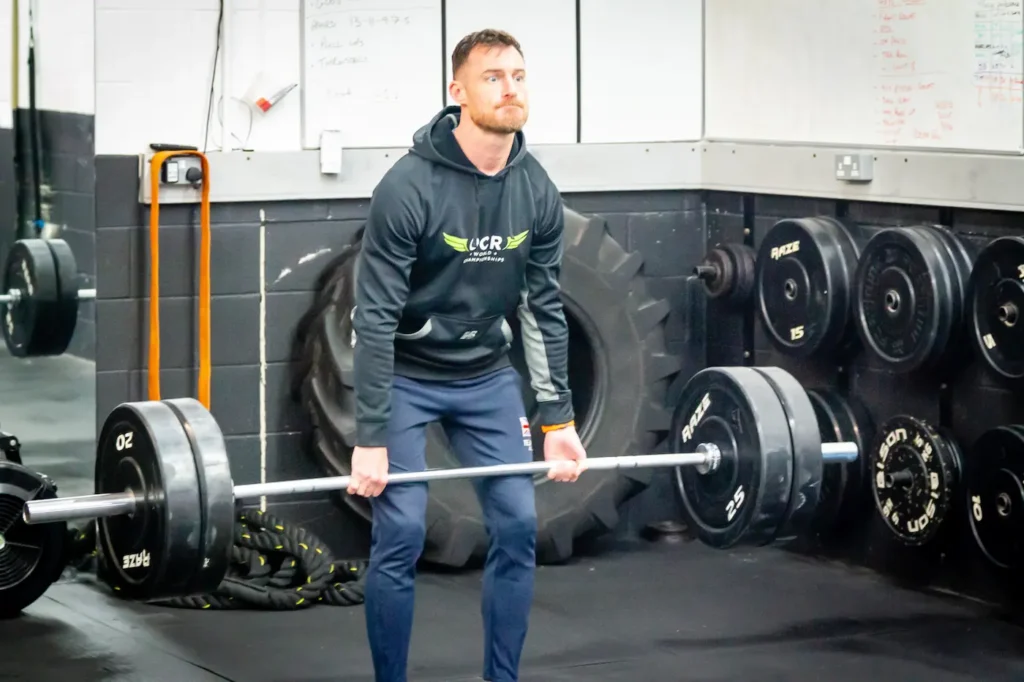
Key coaching cues
- Keep the bar close to your shins
- Keep your back position steady
- Drive through the whole foot
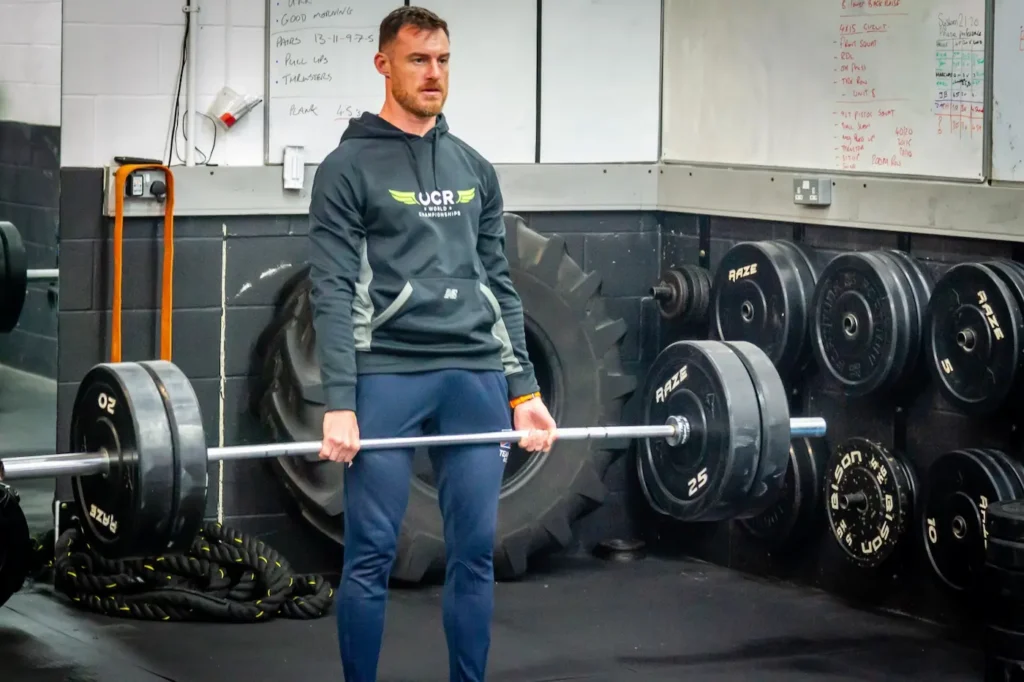
Common mistakes
- Bar drifting away from the body
- Rounding the lower back
- Yanking the bar off the floor
Deadlifts build hip extension strength. Hip extension drives acceleration. Stronger hips mean more force into the ground during your first few steps.
Sets and reps
- 3 to 5 sets of 2 to 5 reps
- Rest 2 to 3 minutes
2) Back Squat
Best for
Total lower body strength, torso control and stronger hips.
How to do it
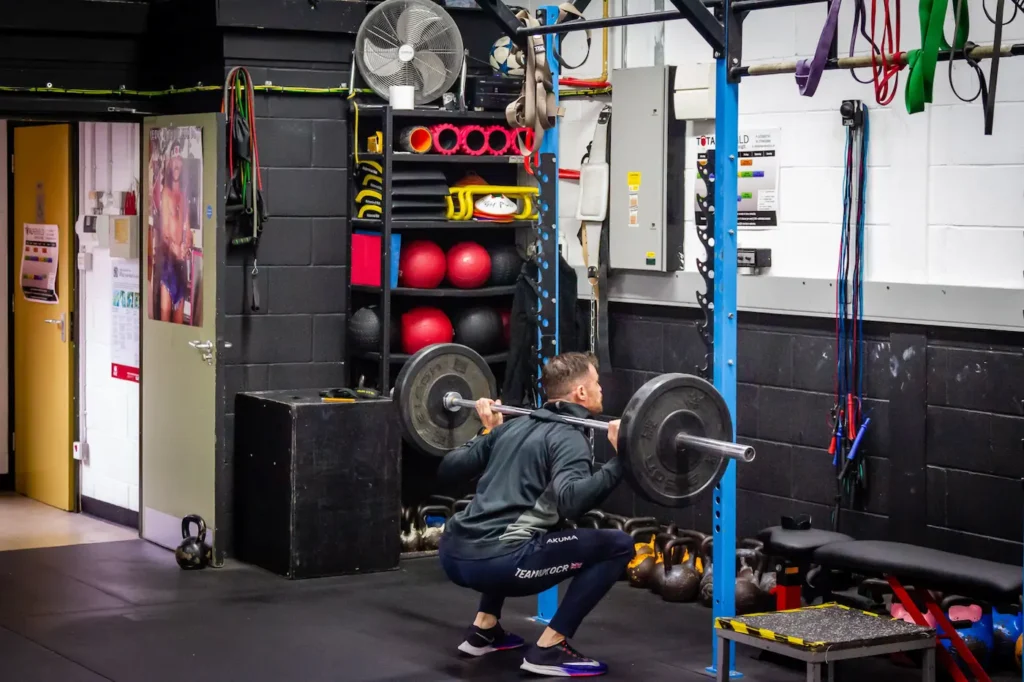
- Choose a stance that feels stable and strong
- Grip the bar tight and set your upper back
- Brace before you descend
- Sit down between your hips and keep your feet planted
- Hit your best depth with control
- Drive up fast and stand tall
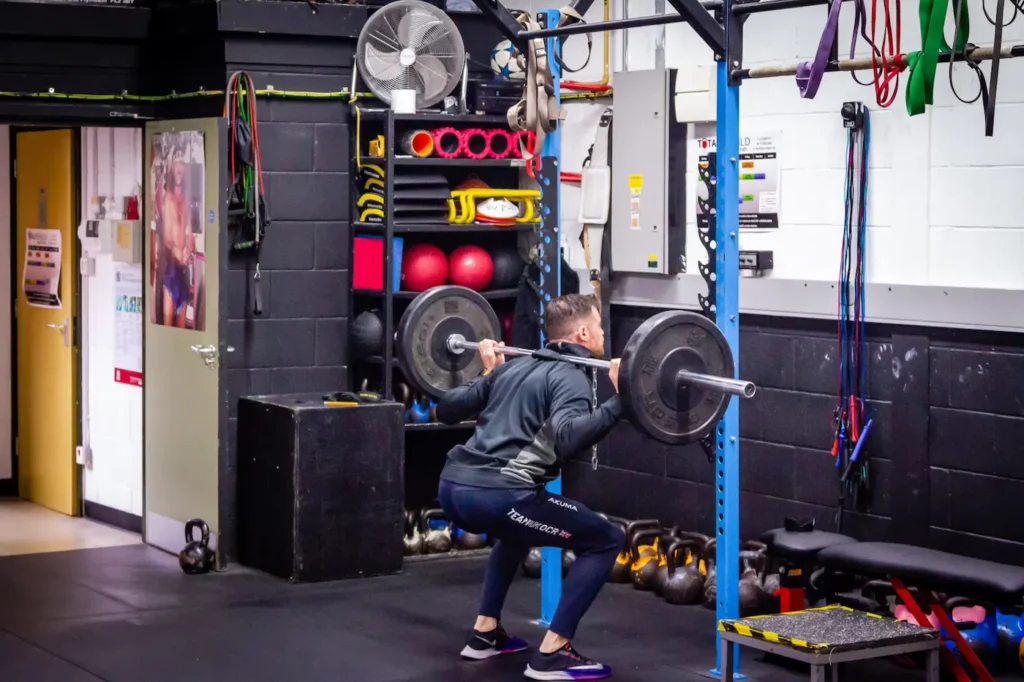
Key coaching cues
- Keep your trunk braced
- Keep your knees tracking over your toes
- Drive up with intent, do not grind
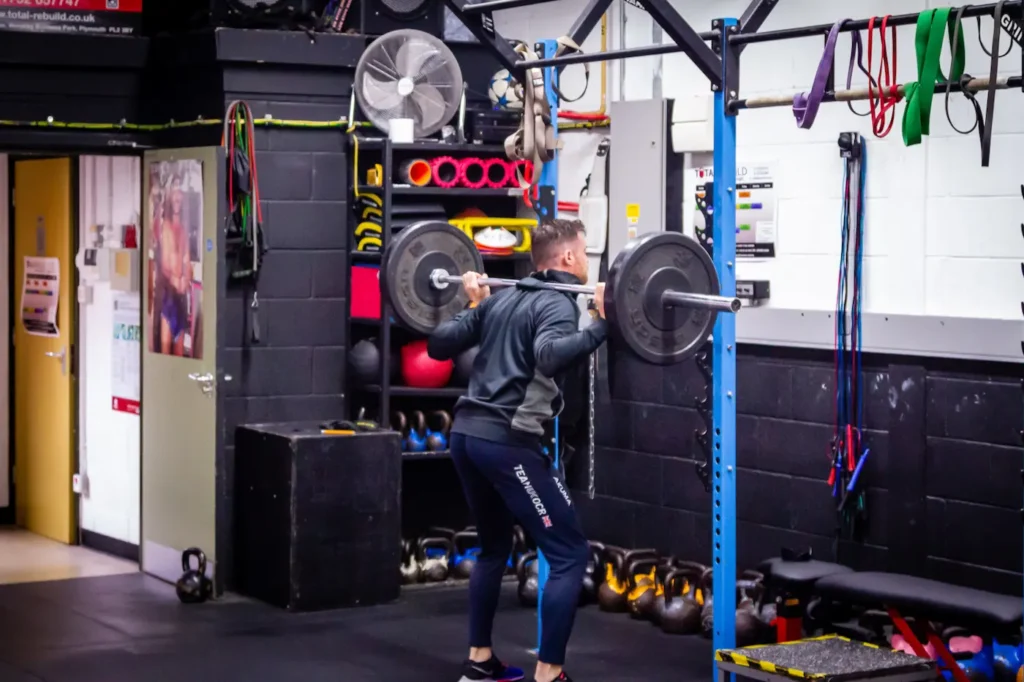
Common mistakes
- Losing brace at the bottom
- Knees collapsing in
- Turning every set into a max effort grind
Sets and reps
- 3 to 5 sets of 3 to 6 reps
- Rest 2 to 3 minutes
Back squats build force through the hips and knees. More force into the ground means better acceleration and stronger change of direction.
3) Double Kettlebell Clean
Best for
Explosive hip extension, full body power and strong grip.
How to do it
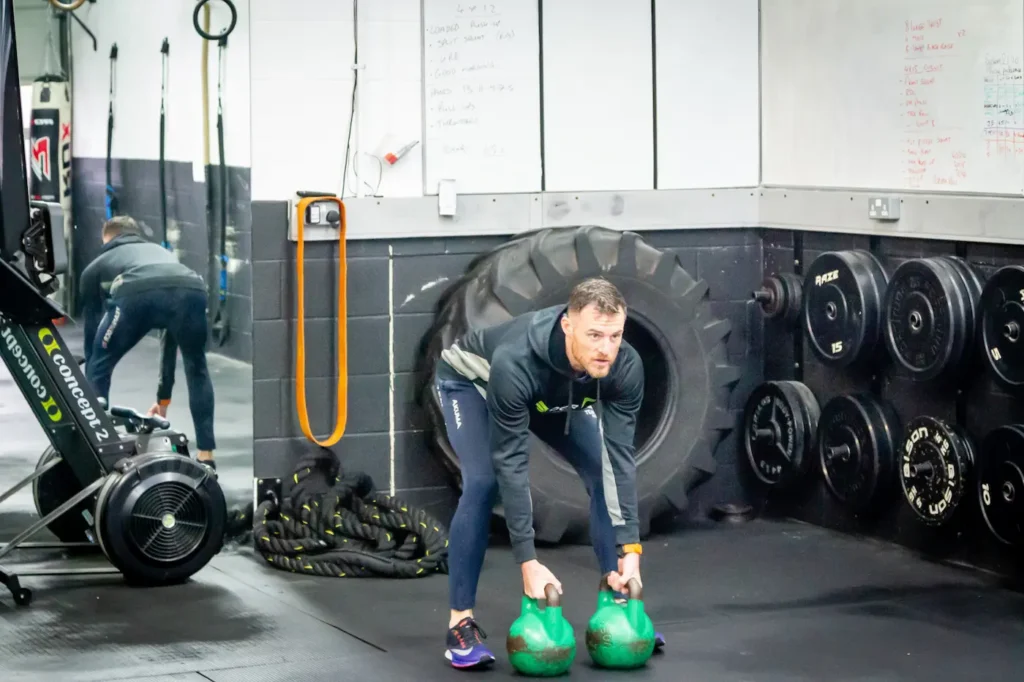
- Set two kettlebells between your feet
- Hinge back and grab the handles
- Keep your lats tight so the bells stay close
- Drive the floor away and snap the hips through
- Catch the bells softly in the rack position
- Reset and repeat
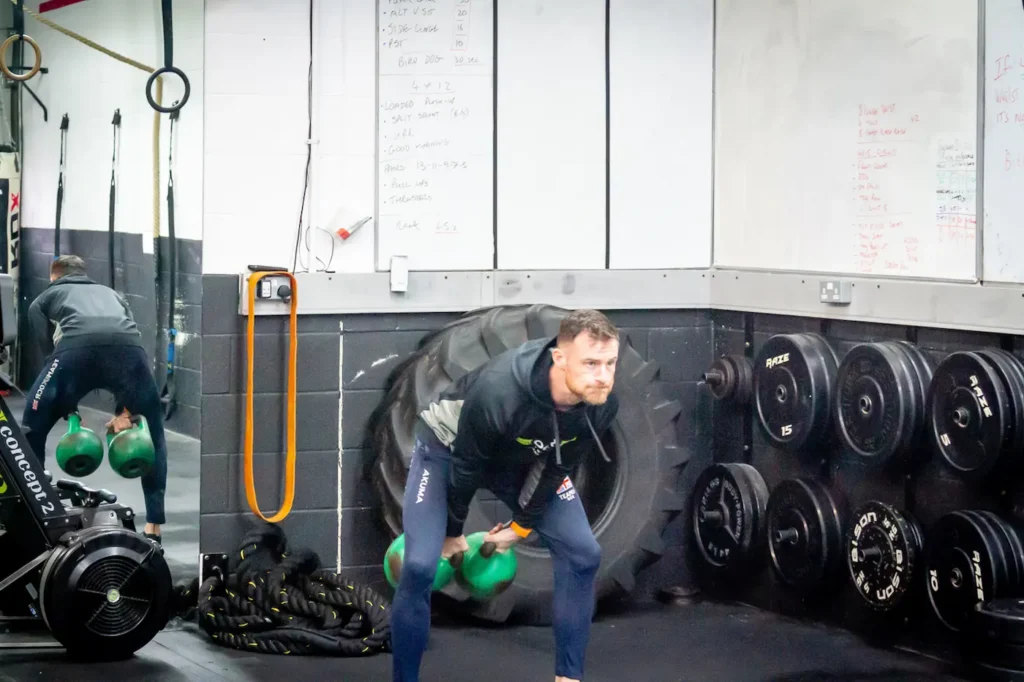
Key coaching cues
- Hips do the work, not your arms
- Move fast from the floor to the rack
- Catch quietly and stable
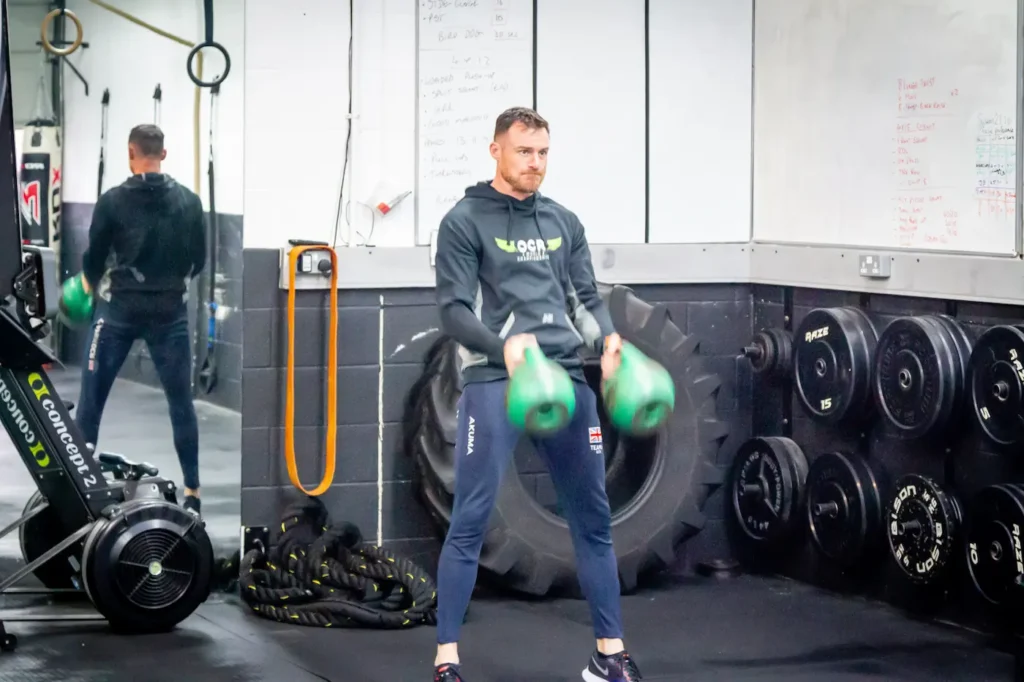
Common mistakes
- Curling the bells up with the arms
- Crashing the bells onto the forearms
- Letting the bells swing too far away
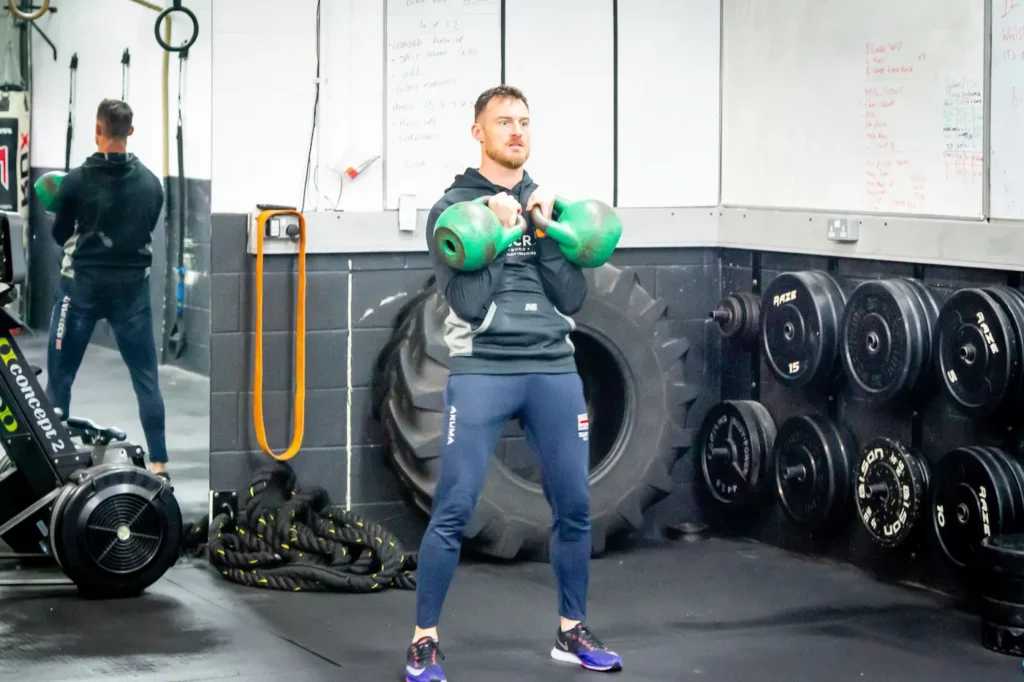
Sets and reps
- 5 to 8 sets of 2 to 3 reps
- Rest 60 to 90 seconds
Double kettlebell cleans train rapid hip extension. That same hip snap drives your first few steps when accelerating on the pitch.
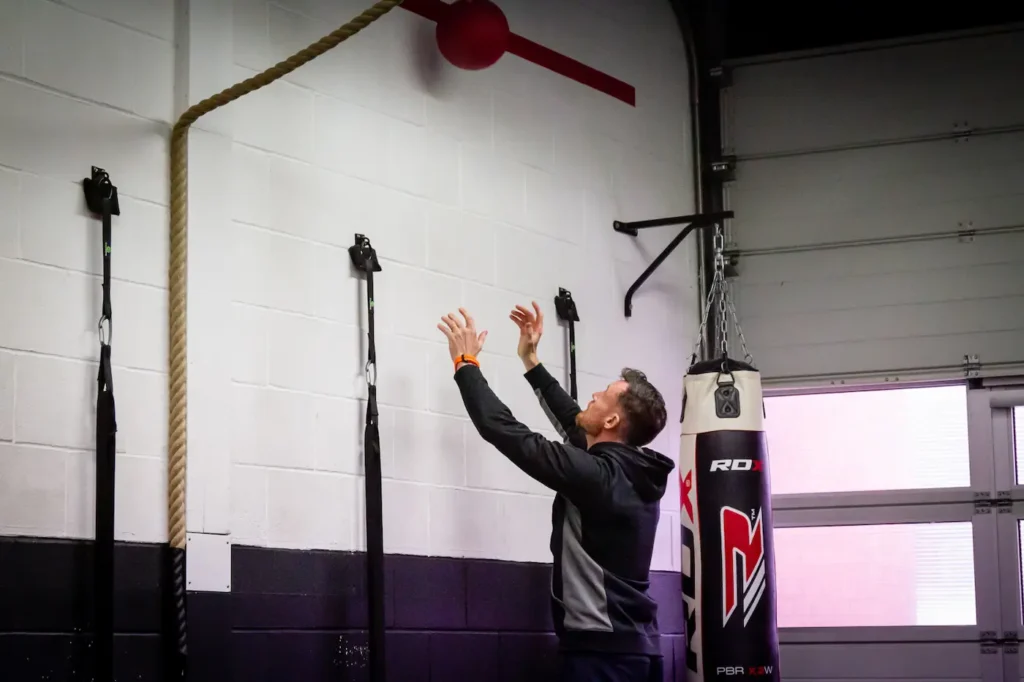
4) Medicine Ball Squat Throw to Wall
This is not a conditioning wall ball.
This is a power throw.
Best for
Fast transition from lowering to driving up, like a quick change of direction.
How to do it
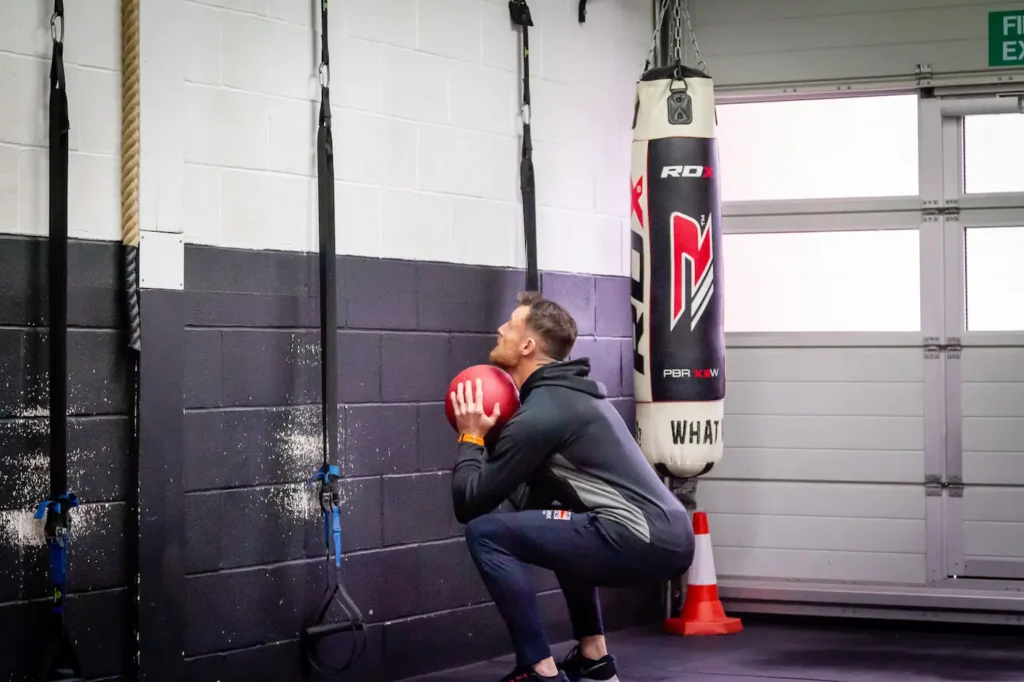
- Stand about one step from a solid wall
- Hold the medicine ball at chest height
- Drop into a quick squat and keep your feet planted
- Reverse fast and throw the ball high to the wall
- Catch, reset and repeat
Key coaching cues
- Drop fast, drive faster
- Keep the throw crisp
- Use a ball weight that lets you move quick
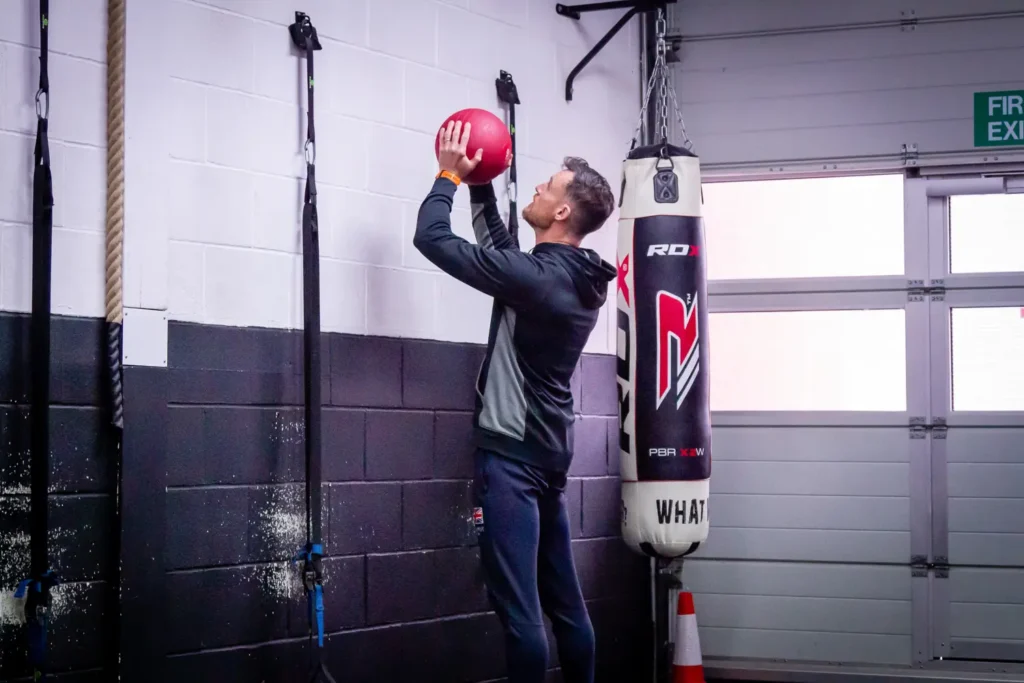
Common mistakes
- Using a ball that is too heavy
- Turning it into a slow squat
- Catching loose and getting pulled forward
Sets and reps
- 6 to 10 sets of 2 to 4 reps
- Rest 45 to 75 seconds
Medicine ball squat throws train rapid force production. That fast switch from lowering to driving up mirrors the demands of acceleration and sharp change of direction on the pitch.
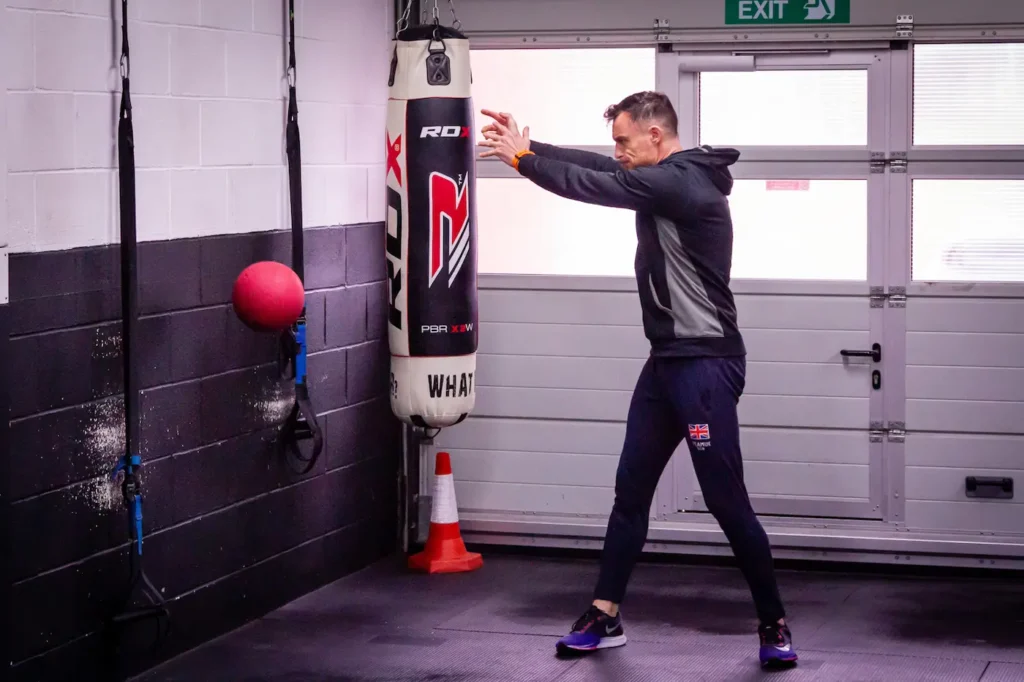
5) Open Stance Medicine Ball Rotation
Best for
Rotational power for turns, contacts, shielding, strikes and throws.
How to do it
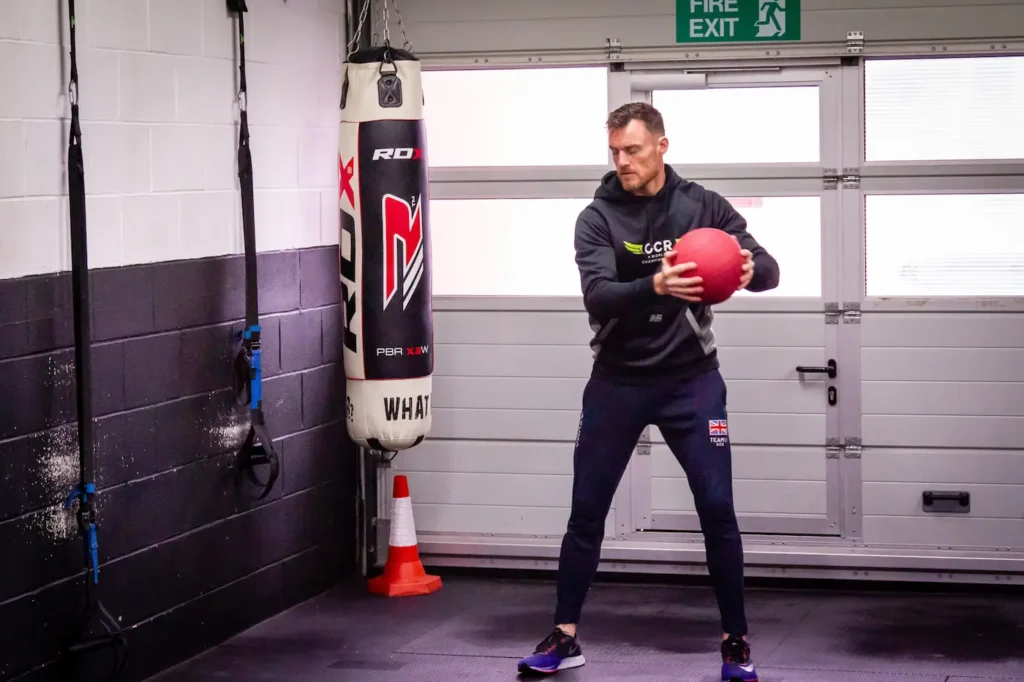
- Stand side-on to the wall with an open stance
- Start the ball at the back hip
- Load into the back hip and keep your torso braced
- Drive the back foot into the floor
- Rotate hips first, then torso, then arms
- Release the ball into the wall and reset
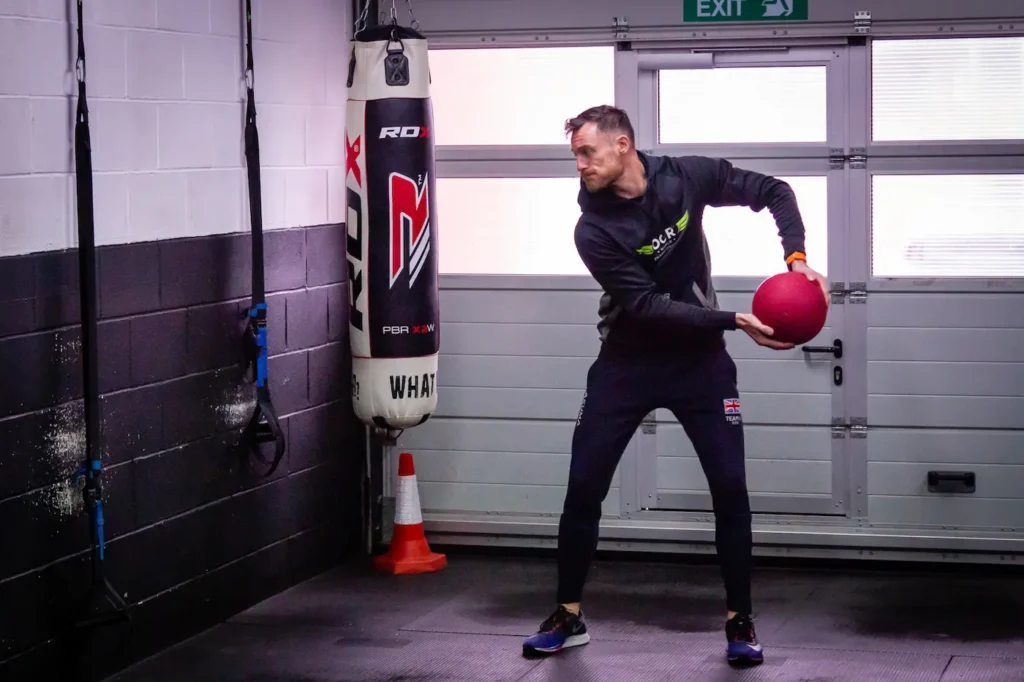
Key coaching cues
- Lead with the hip, do not arm throw
- Keep your ribs down
- Finish balanced, ready to move
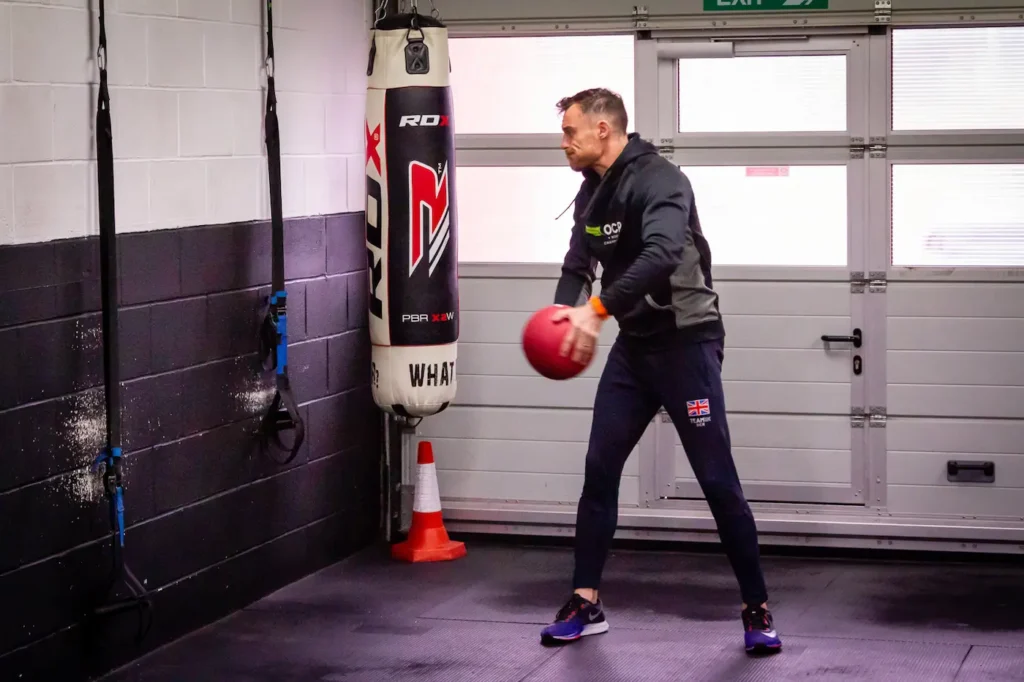
Common mistakes
- Twisting only through the low back
- Throwing with the arms
- Standing too close and rushing the pattern
Sets and reps
- 6 to 10 sets of 2 to 4 reps per side
- Rest 45 to 75 seconds
Open stance rotational throws train force transfer from the ground through the hips into the upper body. That sequence underpins sprinting, tackling, striking and sharp changes of direction.
A simple weekly plan
If you train 3 to 4 days a week, this fits.
Option A: Two gym days plus one pitch speed day
Day 1 Gym strength + power
- Back squat 4×4
- Double kettlebell clean 6×2
- Medicine ball squat throw 8×3
Day 2 Pitch speed
- 6 to 10 short sprints of 10 to 20 metres
- Full rest between reps
- Stop while your speed stays high
Day 3 Gym strength + rotation
- Deadlift 5×3
- Open stance med ball rotation 8×3 each side
- Optional: light assistance work you already tolerate well
Option B: One gym day plus sport sessions
If you already play and train on the pitch, run this once per week.
Full body gym
- Back squat 4×4
- Deadlift 4×3
- Medicine ball squat throw 6×3
- Open stance med ball rotation 6×3 each side
FAQs
Will these exercises make me faster without sprinting?
They will help.
They will not replace sprint work.
If you want to get quicker, keep at least one short sprint session each week.
How heavy should I go?
Heavy enough to challenge you.
Light enough to move well.
If the last rep turns into a grind, drop the load.
How long should I rest between sets?
Strength lifts need longer rest.
Power work needs enough rest to stay fast.
Use:
- 2 to 3 minutes for deadlifts and squats
- 45 to 90 seconds for cleans and throws
What if I only have 30 minutes?
Do this:
- Squat 4×4
- Clean 6×2
- Med ball throw 6×3
Leave.
Do it again next week.
Key takeaways
- Strength supports speed
- Power expresses it fast
- Train these 1 to 2 times per week
- Keep reps low and crisp
- Pair this with short sprints for best carryover
If you want me to build this for you in Hevy, start a conversation.